
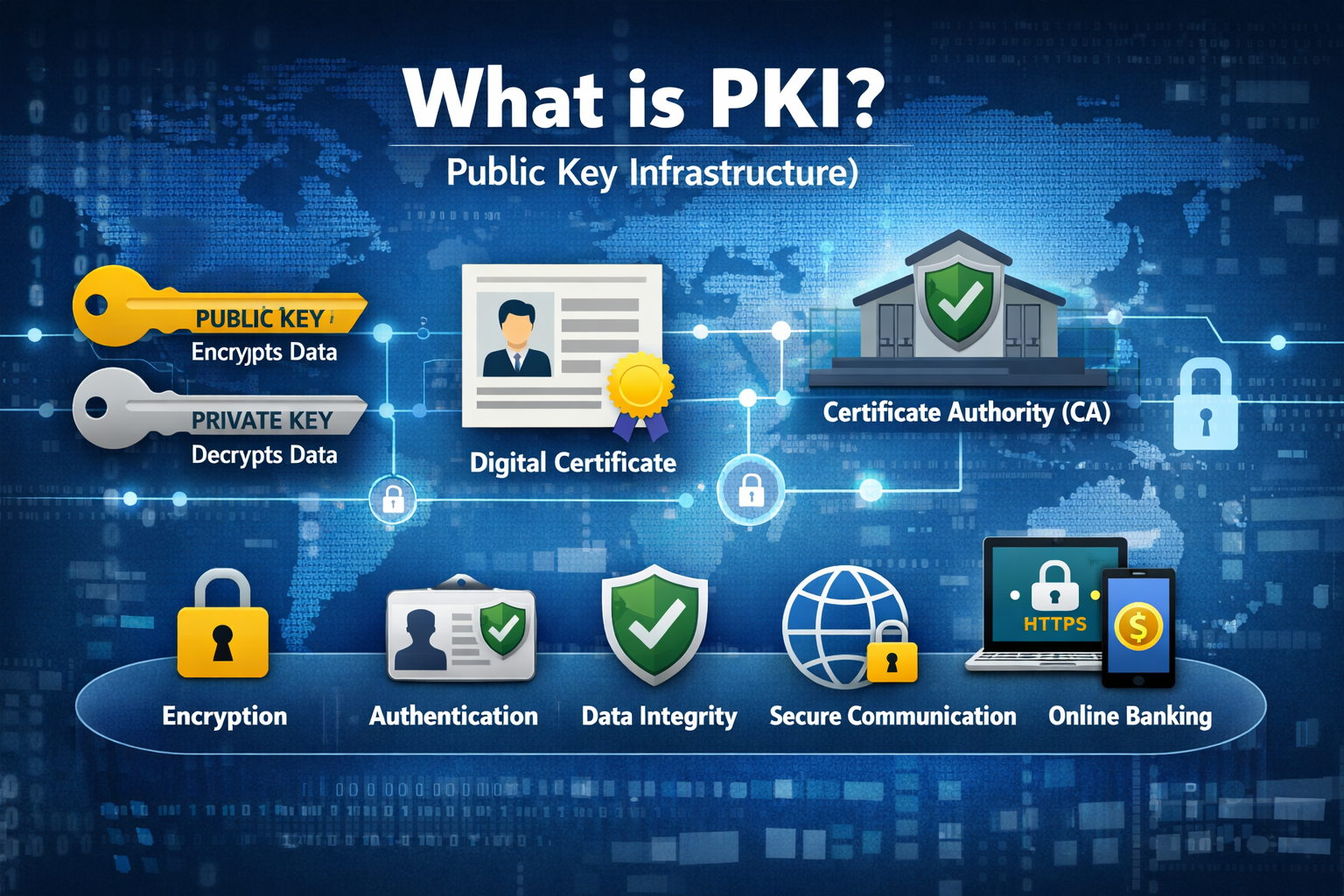
PKI, or Public Key Infrastructure, is a system that helps secure digital communication over the internet. It is used to encrypt data, verify identities, and ensure that information is shared safely between users and systems.
PKI plays a crucial role in online security, especially for websites, emails, online banking, and digital transactions.
What Is PKI?
Public Key Infrastructure (PKI) is a framework made up of hardware, software, policies, and procedures that manage digital certificates and encryption keys.
It helps to:
- Secure data
- Authenticate users and devices
- Prevent unauthorized access
- Build trust in digital communication
Why Is PKI Important?
The internet is an open network, which makes data vulnerable to hacking and impersonation. PKI solves this problem by ensuring that communication happens between verified and trusted parties.
PKI provides:
- Data confidentiality
- Identity verification
- Data integrity
- Secure online transactions
How Does PKI Work?
PKI uses public key cryptography, which involves two keys:
- Public Key: Used to encrypt data and shared publicly
- Private Key: Used to decrypt data and kept secret
Data encrypted with a public key can only be decrypted using the matching private key.
Digital Certificates
A digital certificate is an electronic document that proves the identity of a user, website, or organization. It connects a public key with its owner.
Digital certificates are commonly used in SSL/TLS security for websites.
Certificate Authority (CA)
A Certificate Authority (CA) is a trusted organization that issues digital certificates after verifying the identity of the applicant.
Examples of Certificate Authorities include:
- DigiCert
- GlobalSign
- Let’s Encrypt
Key Components of PKI
- Certificate Authority (CA)
- Registration Authority (RA)
- Public and Private Keys
- Digital Certificates
- Certificate Revocation List (CRL)
Where Is PKI Used?
PKI is widely used in:
- Secure websites (HTTPS)
- Online banking
- Email encryption
- Digital signatures
- VPNs
- Government and enterprise systems
Benefits of PKI
- Strong data encryption
- Secure authentication
- Trusted digital identities
- Protection against cyber threats
- Safe online communication
Conclusion
Public Key Infrastructure (PKI) is the foundation of modern cybersecurity. It enables secure, trusted communication across the internet and protects sensitive data from unauthorized access.
As digital interactions continue to grow, PKI remains an essential technology for maintaining online security and trust.